
Agents that call tools and act on their own are being deployed with very little supervision, and most of them are trusted once, at launch, and never looked at again. We think that is the wrong model. This paper describes Evidence-Based Delegation (EBD), in which an agent gets only as much authority as the checks on it can justify, and loses it quickly when a check fails. The design has four verification layers (identity, specification, execution and outcome) and a trust budget for each class of task. The budget rises slowly while checks come back clean and falls sharply when a violation is caught. We prove a bound on what an adaptive attacker can take from actions that run without review, work out how long promotion takes, and derive how much error an honest agent can show before it stops earning autonomy. We then tested the idea in a Monte-Carlo simulation (1,000 paired runs per setting, four agent behaviours, nine policies) and with a small prototype of the gateway and its tamper-evident log. In the simulation, EBD matched the loss of reviewing every action ( against loss units) with 51% fewer reviews, and it cut loss by 75 to 97% against static-permission and audit-only baselines. It also has clear weaknesses. It escalates a lot for unreliable agents, it does worse when risk is underestimated, and our proven bound is loose by two to three orders of magnitude. All results come from simulation under assumptions we state, so they describe how the mechanism behaves and say nothing certain about real deployed agents.
Turn pages by dragging a corner, clicking a page, or with the ← → keys.
Loading article…
Open the PDF instead
DOI: https://doi.org/10.63328/IJRDES-V8RI6P4
OpenYou've reached the end of this article.
Marpu Jagadeesh , " Trustworthy Autonomous Agents Through Evidence-Based Delegation: Formal Verification, Prototype Implementation, and Simulation Analysis", International Journal of Research and Development in Engineering Sciences(IJRDES), Volume 8 , Issue 1 , pp 31 – 47 , November 2026. CrossRef DOI: https://doi.org/10.63328/ijrdes-v8ri6p4
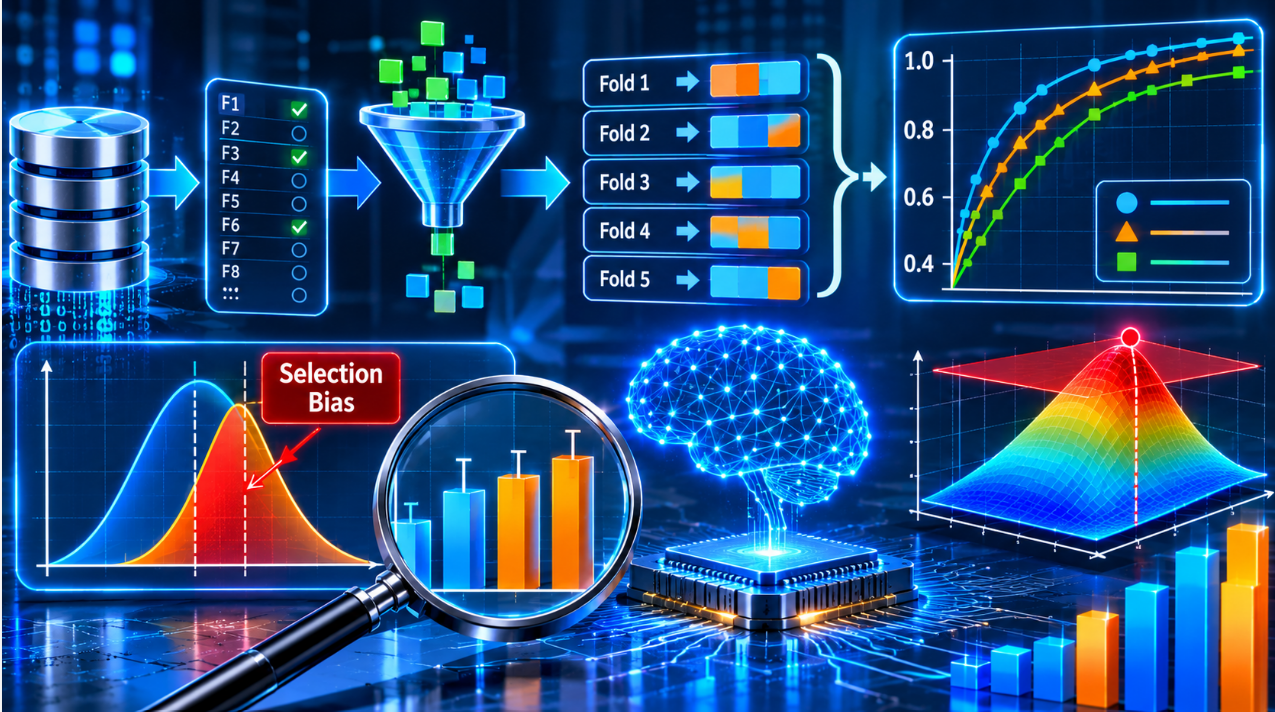
Choosing the most promising features on all the data and then cross-validating a classifier on them ...
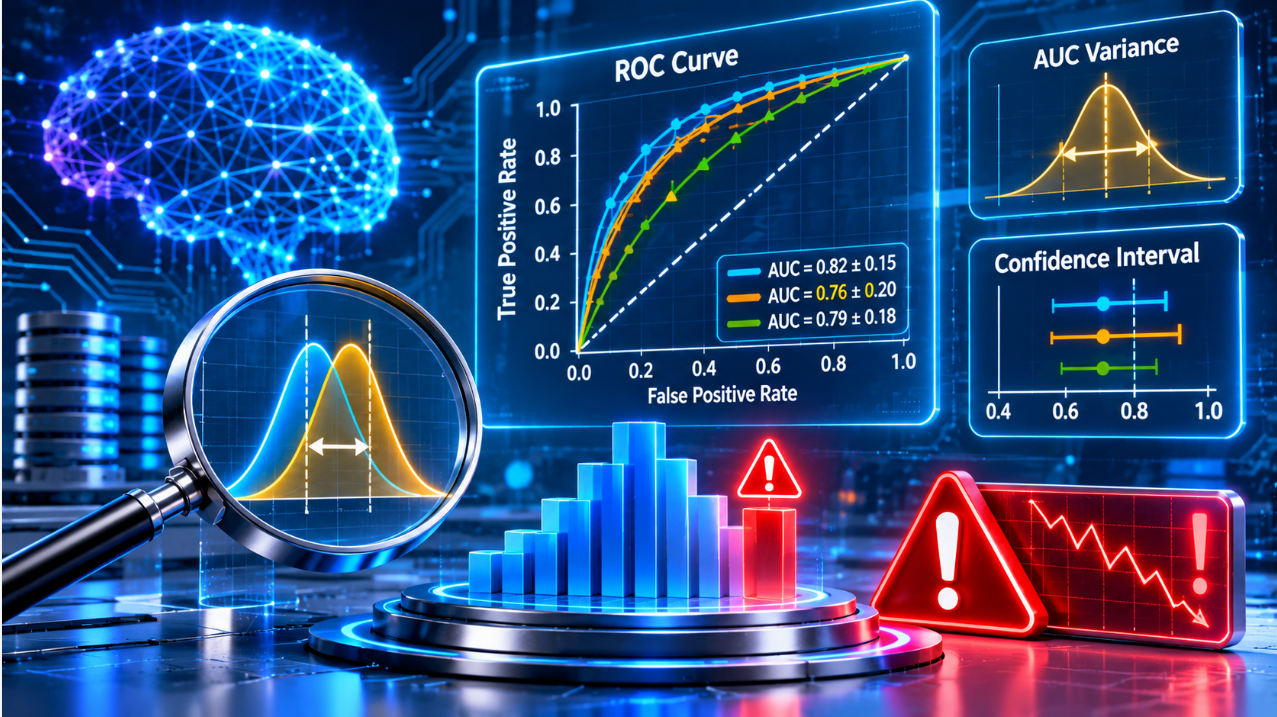
The area under the ROC curve (AUC) is reported with a confidence interval, usually from a variance f...
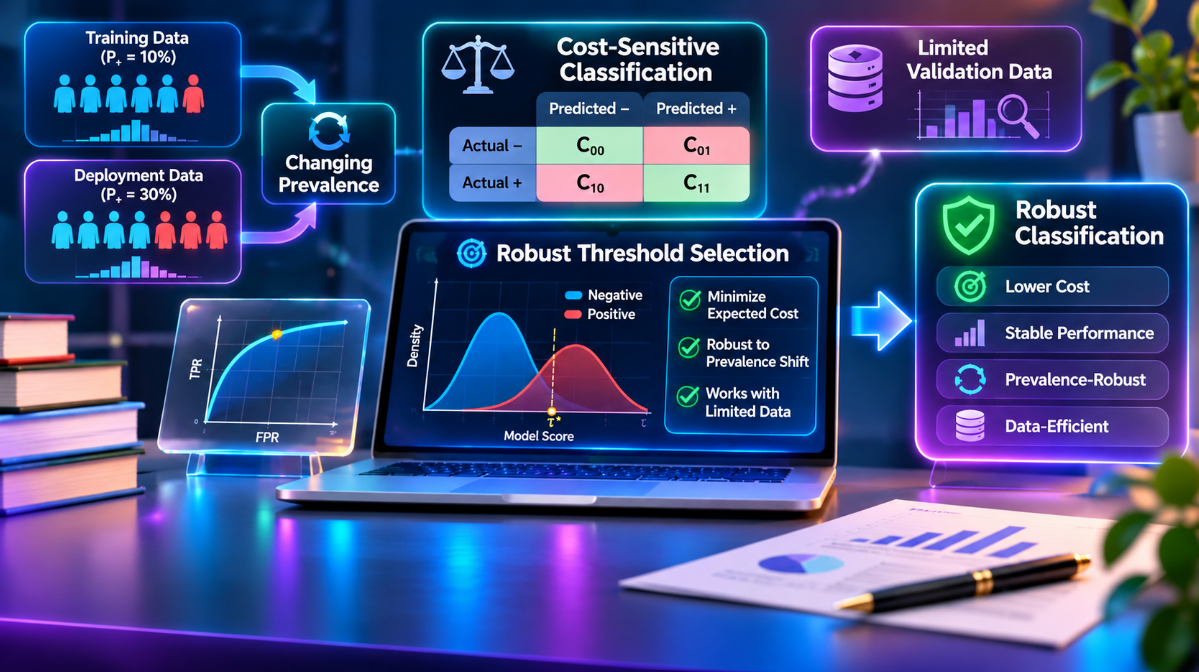
A classifier produces a score, but a decision needs a threshold, and the threshold depends on the co...

If an AI agent’s actions are logged, the log is only useful if nobody can quietly change it afterw...