

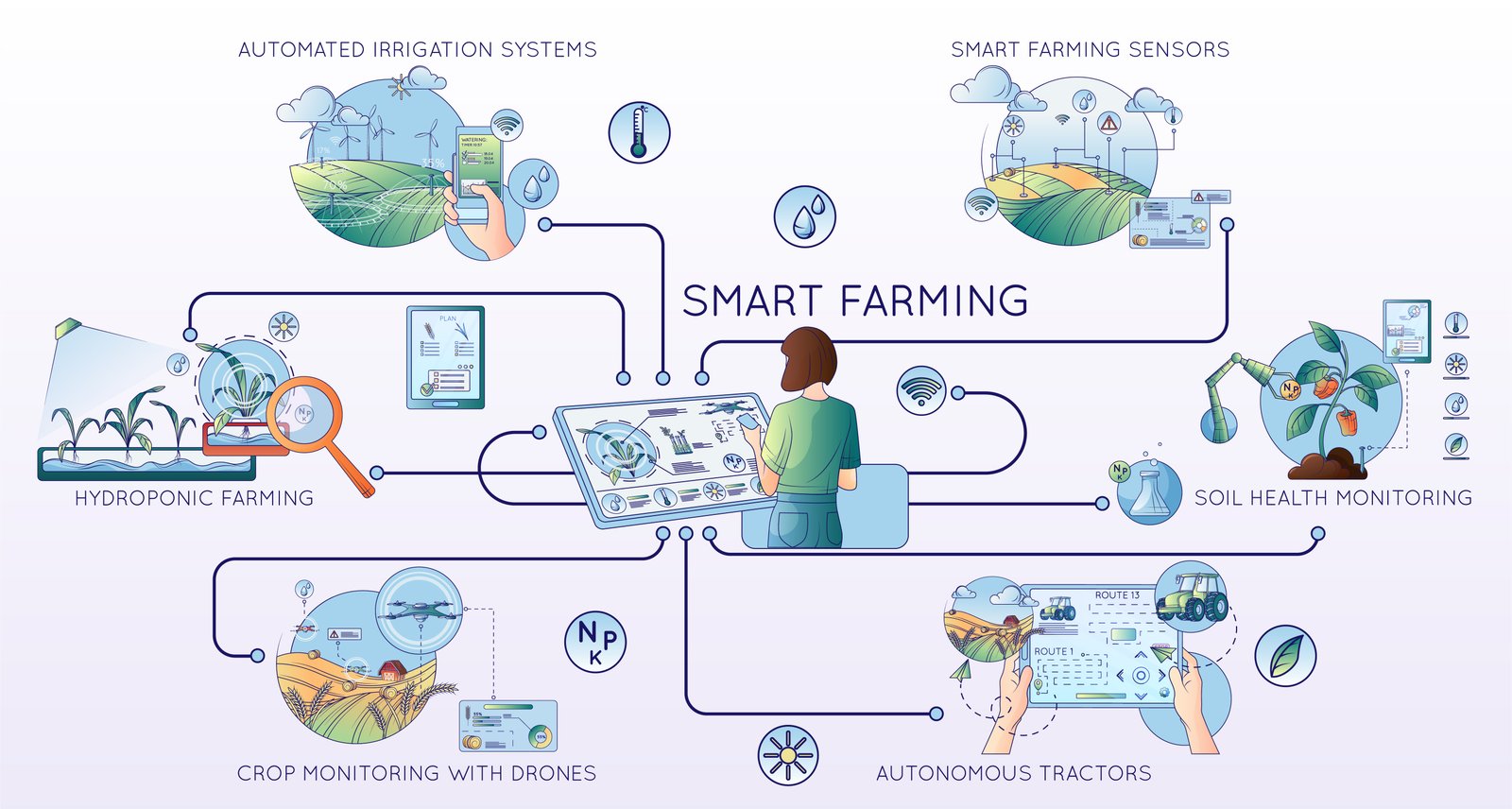
Recent advances in Internet of Things (IoT)-enabled hydroponic and aquaponic system research highlight a potentially transformative shift in agricultural paradigms. These cutting-edge solutions tackle a variety of issues, from the need for sustainable farming practices to extreme environmental circumstances. The attainment of increased growth rates and enhanced crop production through careful monitoring and management of environmental conditions is a recurring topic in all the research. Actuators, sensors, and microcontrollers can be integrated to optimize plant development and reduce human dependency by adjusting fertilizer delivery and ambient conditions in real-time. This integration is typically made possible by platforms like NodeMcu and Raspberry Pi. A workable approach for sustainable food production, the studies also highlight the use of these systems in areas were traditional farming faces significant obstacles. It is explored how hydroponics and aquaponics might help with precision agriculture in urban and suburban areas where farmland is scarce, in addition to alleviating the issue of food scarcity. The findings recommend ongoing research in the fields of data science, AI, and UI design in order to improve and enhance these technologically advanced farming methods. The convergence of cutting-edge technologies and environmentally conscious agricultural methods portends a future in which Internet of Things-enabled hydroponic and aquaponic systems are essential to guaranteeing food security worldwide.
This paper The aim of the project is to design microstrip patch antenna loaded with meta-material us...
Recent advances in Internet of Things (IoT)-enabled hydroponic and aquaponic system research highlig...

The field of material science has seen a significant change with the production of materials that ca...