

The rapid advancement of Artificial Intelligence (AI) and Deep Learning (DL) technologies has transformed industrial automation by enabling intelligent, adaptive, and self-optimizing systems. This paper proposes a two-level hybrid architecture for smart industrial automation based on AI-driven deep learning models. The architecture integrates both machine-level and system-level intelligence to enhance operational efficiency, fault detection, predictive maintenance, and decision-making in real time. At the first level, deep learning algorithms such as Convolutional Neural Networks (CNN) and Recurrent Neural Networks (RNN) are employed for data sensing, pattern recognition, and anomaly detection from industrial Internet of Things (IIoT) devices. The second level utilizes AI-based control mechanisms, including reinforcement learning and expert systems, to optimize process automation and resource management. The hybrid design ensures scalability, adaptability, and interoperability across various industrial domains. Experimental and analytical evaluations demonstrate improved accuracy, reduced downtime, and energy-efficient performance. This approach signifies a step toward achieving fully autonomous, intelligent, and sustainable industrial ecosystems.
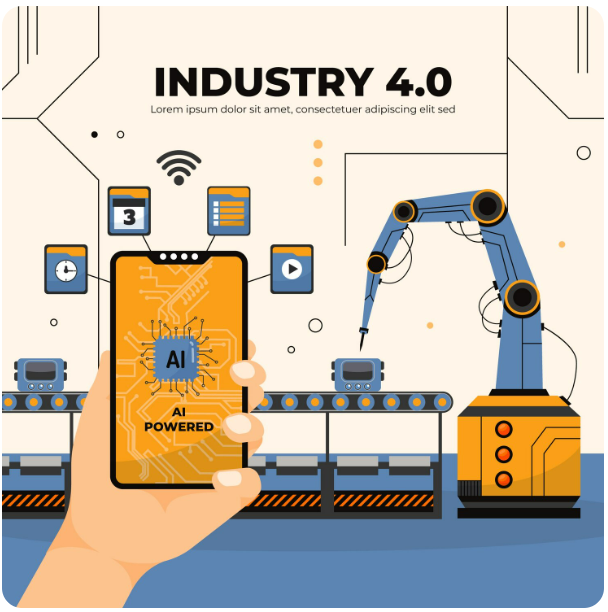
The rapid advancement of Artificial Intelligence (AI) and Deep Learning (DL) technologies has transf...

Disaster management requires rapid, accurate decision-making based on diverse and often unstructured...

Stock price forecasting is a critical task in financial analytics, aiming to predict future price mo...

Text mining, a crucial field within data mining, focuses on extracting meaningful patterns, trends, ...