
Model comparisons often report the mean accuracy over K random seeds and judge the gap against the seed-to-seed spread. That spread measures one source of noise. The other is the test set, which is the same for every seed and so cannot be averaged away by running more seeds. We give the standard error of the difference, ?(2?s²/K + ?d²/N), where ?s is the seed standard deviation of accuracy, ?d the standard deviation across test cases of the paired difference in correctness, and N the number of test cases. A seed-only interval then covers the true difference of the two procedures with probability 2?(1.96 a/?(a² + b²)) ? 1, which falls toward zero as seeds are added; here a and b are the two noise terms. In a semi-synthetic simulation with 100 test cases, coverage fell from 70% to 37% as K went from 3 to 30, within 0.052 of the formula for K ? 5. On the digits dataset, for a multilayer network and a random forest with the same population accuracy to within 0.1 points, the seed-only interval covered 41% with 20 seeds and 100 test cases, and rejected equality in 59% of draws; an interval that also includes test-set noise covered 96%. Pairing the comparison on the same test cases reduced the per-case standard deviation by factors of 4.1 to 7.3. Seeds beyond K? = 2?s²N/?d² add little; for the real pairs K? was between 0.6 and 10.8 at 300 test cases. Simulations are semi-synthetic; the real data are one small digits split with four model families.
Turn pages by dragging a corner, clicking a page, or with the ← → keys.
Loading article…
Open the PDF instead
DOI: https://doi.org/10.63328/IJRDES-V8RI6P8
OpenYou've reached the end of this article.
Seepana Praveenkumar , “ Reliable Model Comparison Under Dual Sources of Variability: Training Seeds and Evaluation Test Cases using Machine Learning” , International Journal of Research and Development in Engineering Sciences (IJRDES), Volume 8 , Issue 6 , pp 78 – 87, November 2026. CrossRef DOI: https://doi.org/10.63328/ijrdes-v8ri6p8
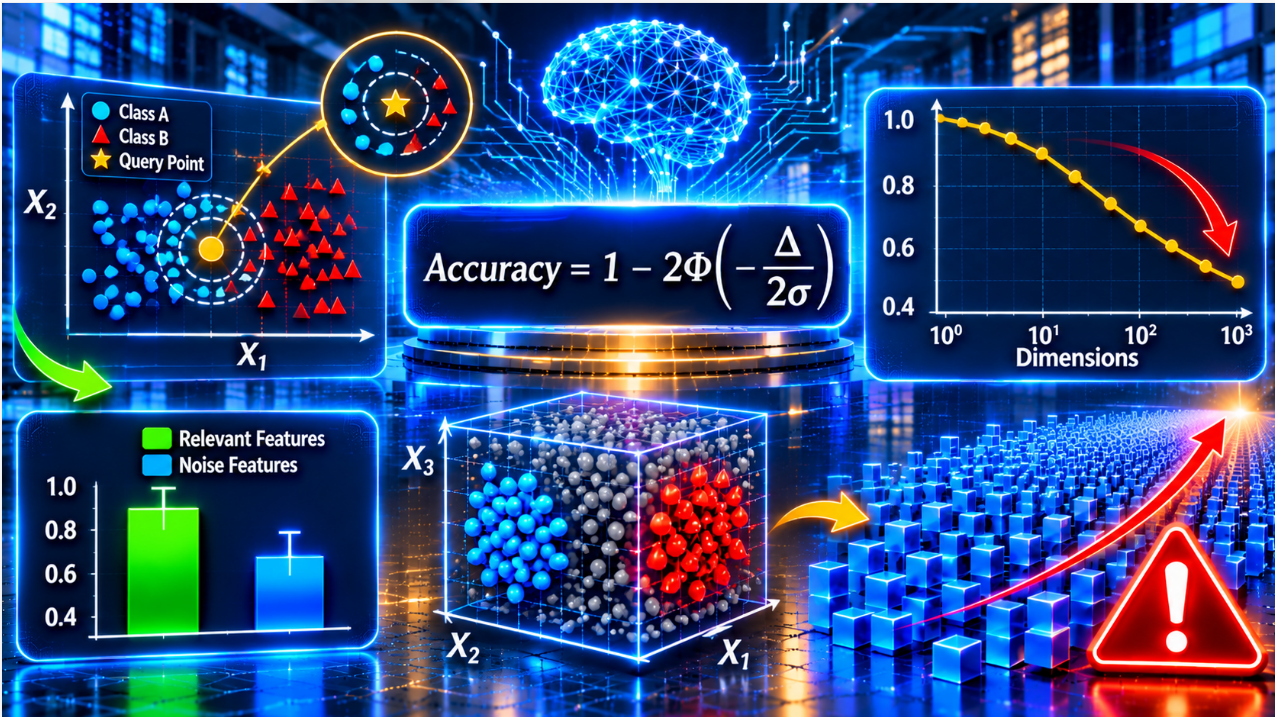
Nearest-neighbour classifiers degrade when irrelevant features are added, and the usual explanation ...
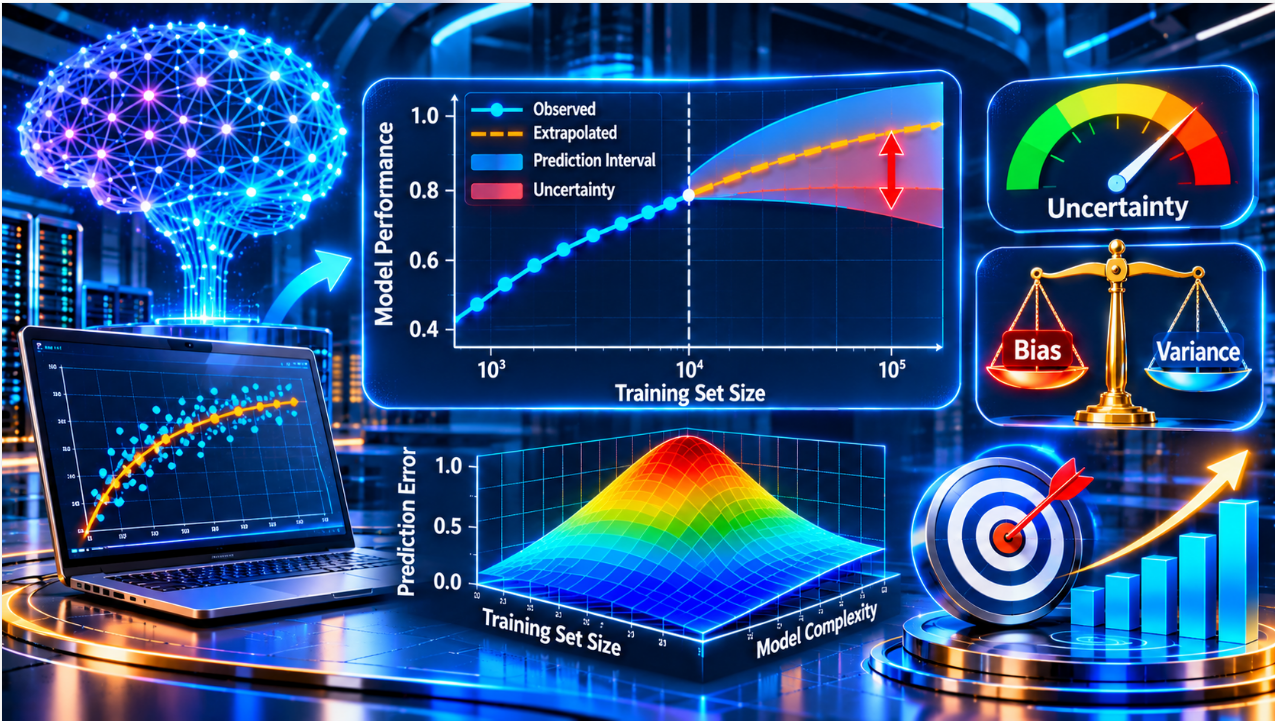
A common way to plan data collection is to train a model on a few small subsets, fit a power law to ...
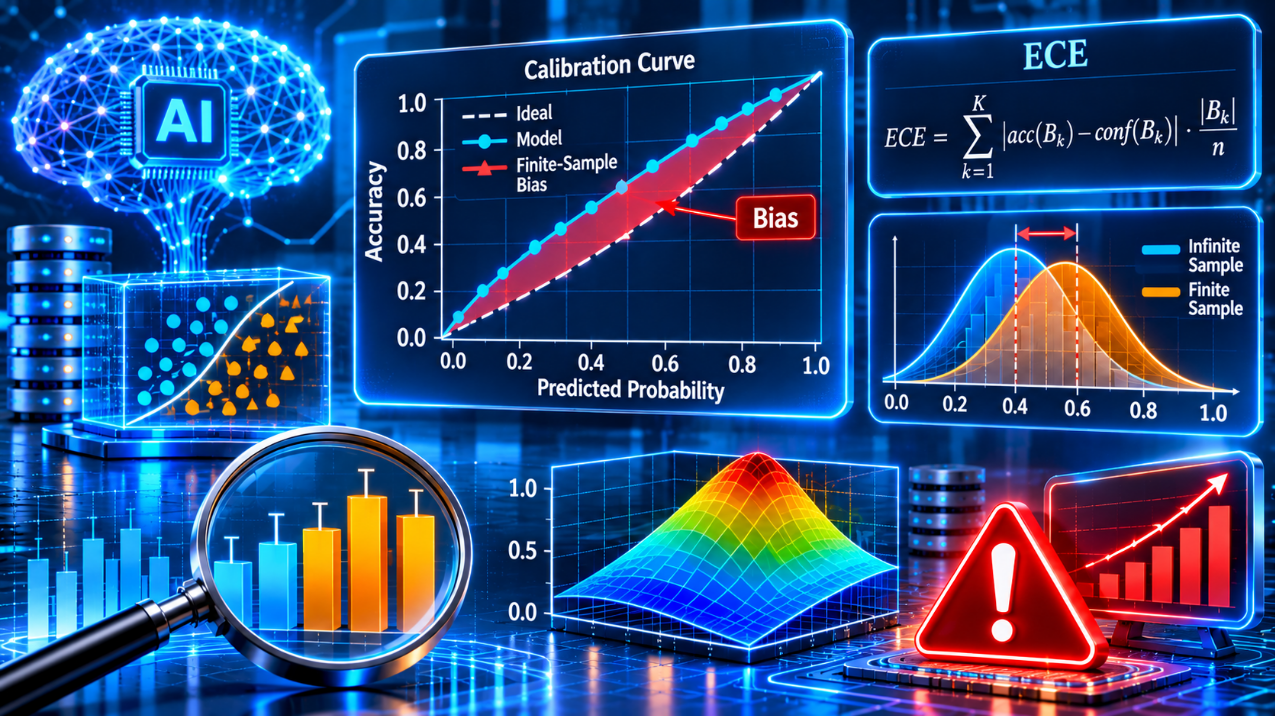
The expected calibration error (ECE) is the standard number for reporting how well a classifier’s ...

Choosing the most promising features on all the data and then cross-validating a classifier on them ...