
The primary objective of the present paper is to assess the growth of economic sectors in the Indian Economy over a long period time with time series analysis which brings out the emerging trends in the growth of economic sectors in the Indian Economy. The economy of India has three basic sectors namely, Primary Sector, Secondary Sector and Services Sector. The paper found that the Gross Value Added (GVA) at basic prices has increased at lower growth rates of less than 5% per year during the period from 1950-51 to 1979-80. Prof. Raj Krishna called this low growth period as “Hindu Rate of Growth” because the annual average growth rate of Gross Value Added (GVA) at basic prices never crossed 5% during this period. From Sixth Five Year Plan onwards, the annual average growth rate of Gross Value Added (GVA) at basic prices has been increased at a greater than 5% in all the plan periods and it is the highest at 7.4% during Post-COVID Annual Plans period. The paper found that all the three sub-sectors of the Tertiary Sector namely, Trade, hotels, transport & communication, Financing, real estate and professional services, public administration, defence and other services have higher growth rates than the growth rates of Primary and Secondary Sectors. Therefore, it is clear that both Primary and Secondary Sectors of Indian economy have been growing with a slow growth rates than the Services Sector. The paper found that there is a continuous downward trend in the contribution of Primary Sector to the Gross Value Added (GVA) of India with a negative slope of 0.646, which indicates that for every one year increase in the time period there will be a decline in the contribution of Primary Sector to the GVA of India by 0.646 percentage points. On the other hand, it is observed that the contributions of both Secondary and Service Sectors to the GVA of India have depicted upward trend with a positive slopes 0.190 and 0.456 respectively for Secondary and Service Sectors to the GVA of India. Therefore, it is inferred that the changes in the contribution of Service Sector is at a greater speed than the changes in the contribution of Secondary Sector to the GVA of India.
Turn pages by dragging a corner, clicking a page, or with the ← → keys.
Loading article…
Open the PDF instead
DOI: https://doi.org/10.63328/IJRDES-V7RI3P5
OpenYou've reached the end of this article.

Artificial Intelligence (AI) is revolutionizing Human Resource Management (HRM) by integrating autom...
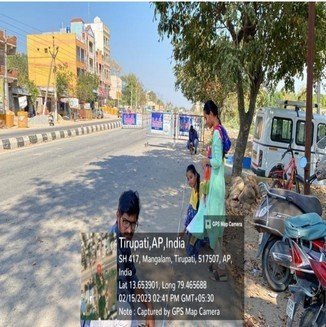
Roads make a key role to economic development and growth and take important social benefits. They ar...

The use of precision farming has become a transformative approach to optimizing crop production whil...

This paper presents a comprehensive conceptual design for a mobile application aimed at revolutioniz...